I know the headline is provocative. But hear me out.
Most Americans, when asked to name the most disgraceful decision in Supreme Court history, will likely point to Dred Scott v. Sandford. And they would be right to. That 1857 ruling by the Taney Court denied Black Americans the basic right of citizenship and helped push this country into civil war. It was morally bankrupt, historically catastrophic, and unmistakably evil.
But today, I believe we are witnessing the Taney Court of our time, the Roberts Court. Different era, different language, but the same mission: to preserve power for the few and strip rights from the many. Where Taney wrote Black Americans out of the Constitution, Roberts is erasing the tools that make equal citizenship possible.
The Taney Court lit a match. The Roberts Court is hollowing the house.
Taney’s Dred Scott decision shocked the conscience. It drew outrage. It became a rallying cry for abolitionists and ultimately helped fuel the movement that ended slavery. As horrific as it was, its injustice was clear and undeniable.
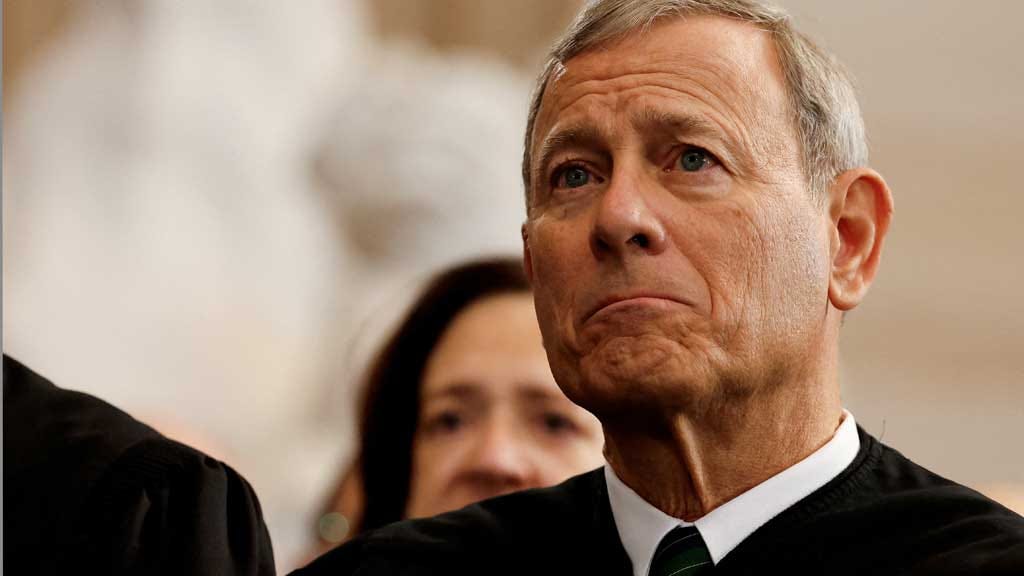
Photo Credit: Chip Somodevilla/Pool via REUTERS/File Photo
The Roberts Court, on the other hand, operates in shadows. Its language is sanitized, its posture is polite. But beneath the surface is an aggressive, ideological campaign to roll back civil rights, expand corporate power, and insulate the powerful from accountability. And it is working.
In the past decade, this Court has:
Gutted the Voting Rights Act in Shelby County v. Holder, which opened the door to widespread voter suppression;
Flooded our elections with untraceable dark money in Citizens United;
Undermined anti-discrimination protections and affirmative action;
Struck down student loan relief that would have helped millions of Americans;
Invalidated common sense gun safety laws;
And, just this year, handed down one of the most dangerous decisions in American history by granting a president near-total immunity for criminal acts committed while in office.
Wrap your head around that. The highest court in the land has now told future presidents they can break the law, as long as they claim it was part of their official duties. That is not just bad legal reasoning. It is a roadmap to authoritarianism.
The 60th Anniversary of the Voting Rights Act and the man who helped dismantle it
This year marks 60 years since the passage of the Voting Rights Act of 1965 (VRA). That law stands as one of the crowning achievements of the Civil Rights Movement, secured through the blood, sacrifice, and courage of everyday Americans who faced down dogs, clubs, and death just to vote.
And today, Chief Justice John Roberts, on this 60th anniversary, stands as the man who helped unravel it.
Long before he led the Supreme Court, Roberts was a young lawyer in the Reagan administration, where he built a record of opposition to the VRA’s most powerful enforcement provisions. That same ideology came full circle in Shelby County, where Roberts wrote the opinion that gutted preclearance, the very mechanism that once stopped states with racist histories from suppressing the vote.
He claimed “things have changed in the South.” Tell that to the voters purged from the rolls, the polling places closed, the gerrymandered maps, and the voter ID laws that popped up the very next day. What the Taney Court did in one sweeping moment, the Roberts Court has done step by step: removed protections while pretending the danger is gone.
Destroying Chevron and dismantling the administrative state
Let us also talk about Chevron.
For forty years, Chevron v. NRDC allowed federal agencies to interpret and enforce laws passed by Congress when those laws were ambiguous. That made sense. When Congress writes environmental or workplace safety laws, it is the experts at the EPA or Department of Labor, not federal judges, who should decide how to apply them.
But not anymore.
The Roberts Court has just overruled Chevron, handing massive power to the courts. From now on, unelected judges and not scientists, not engineers, not public health officials get to make the final call on issues they often have no expertise in.
This is not legal nuance. This is a political strategy: a targeted assault on the very ability of the federal government to govern. Can’t win in Congress? Defund the agencies. Can’t stop climate action? Gut the EPA. Can’t eliminate workplace protections? Let the courts do it.
This is not judicial restraint. It is the judicial arm of a long campaign to cripple the modern state and leave everyday Americans at the mercy of unregulated corporate power.
The attacks on our basic freedoms are not done with this Court. In his concurring opinion in Dobbs v. Jackson, Justice Clarence Thomas explicitly called for the Court to “reconsider” other landmark rulings—Obergefell v. Hodges (marriage equality), Lawrence v. Texas (LGBTQ privacy), and Griswold v. Connecticut (access to contraception). This was not subtle. It was a signal. The rights we thought were settled are now fair game. Once again, a powerful Court is telling millions of Americans that their freedom, dignity, and equality are conditional—and that those conditions are being rewritten in real time.
A Court of contrasts and consequences
The Taney Court tried to preserve a brutal, racist system. The Roberts Court is helping build a new one: a regime where unelected justices shield presidents from accountability, silence voters through legal maneuvers, and hollow out the very institutions that once made America more just.
This is not a break from the past, but a continuation of it. The same forces that once denied personhood are now denying protections. The same mindset that protected slavery now protects power.
And what makes this moment even more dangerous is how subtle it can seem. There is no single headline as shocking as the Dred Scott decision. Instead, there is slow erosion: deliberate, precise, and lasting. By the time the consequences are felt by most Americans, the foundations of our democracy may already be crumbling.
So what do we do?
We do not stay silent. We do not wait. We name this for what it is, not just legal overreach, but an attack on democracy itself. And we organize, legislate, and mobilize.
Our most powerful weapon is still the vote. We must keep registering voters and informing them. The road to restoring the Voting Rights Act, securing judicial accountability, and defending democracy runs through the ballot box. Every election matters. Every voter counts. If you’re thinking to yourself that you already know this, then find two people who don’t vote and convince them of their power and importance. Then tell them to pay it forward.
The Taney Court lit a fire. The Roberts Court is extinguishing the light of democracy, one decision at a time.
The Court is counting on us to be too tired, too cynical, or too distracted to fight back. Prove them wrong. Stay loud. Stay organized. And make this Court’s decisions the beginning of their undoing—not ours.
This Substack is reader-supported. To receive new posts and support my work, consider becoming a free or paid subscriber.





No comments:
Post a Comment