
Today we mark the passing of Reverend Jesse Louis Jackson Sr. — a towering figure in American life, a giant in the Civil Rights Movement, and one of the most consequential architects of modern Democratic Party politics.
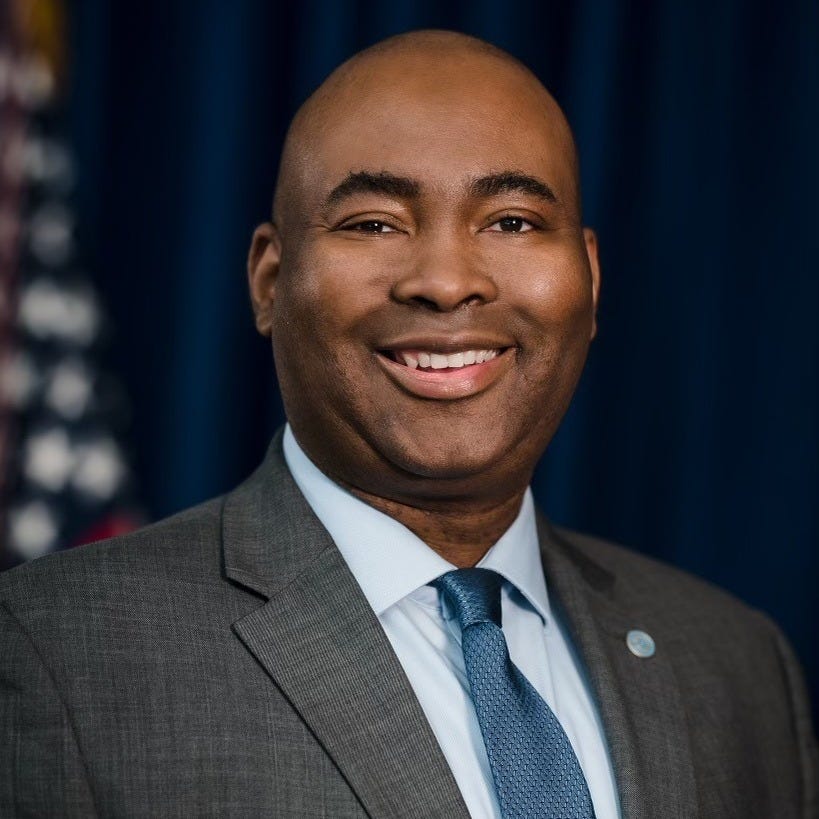
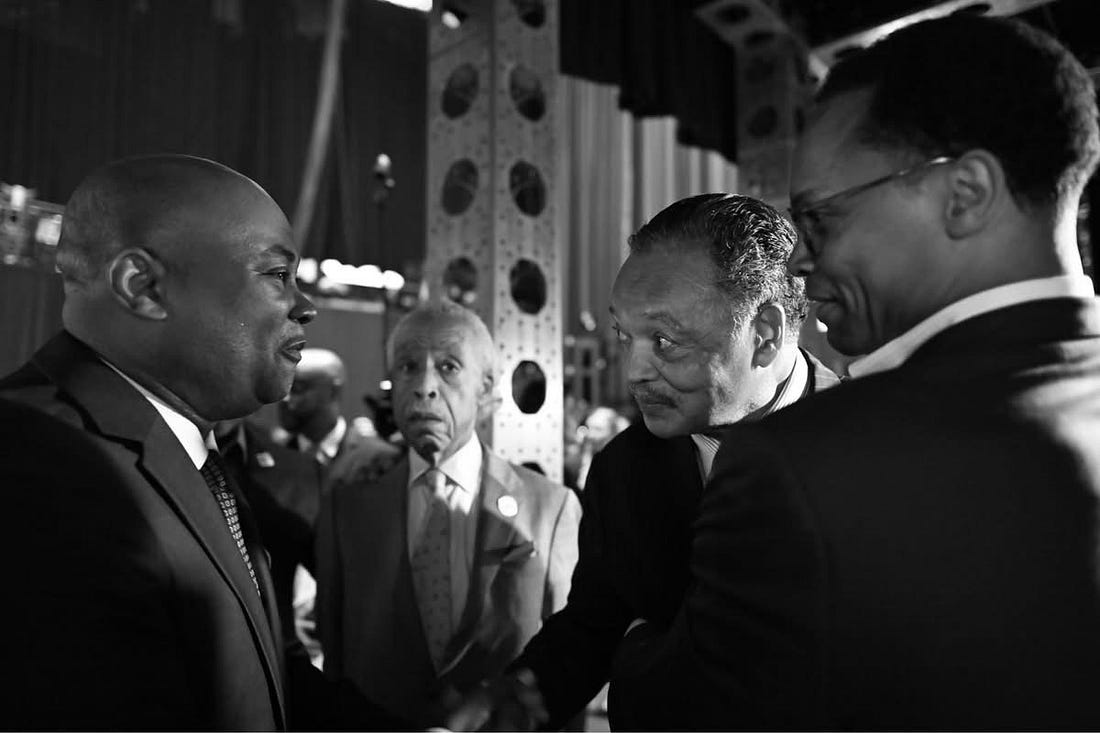
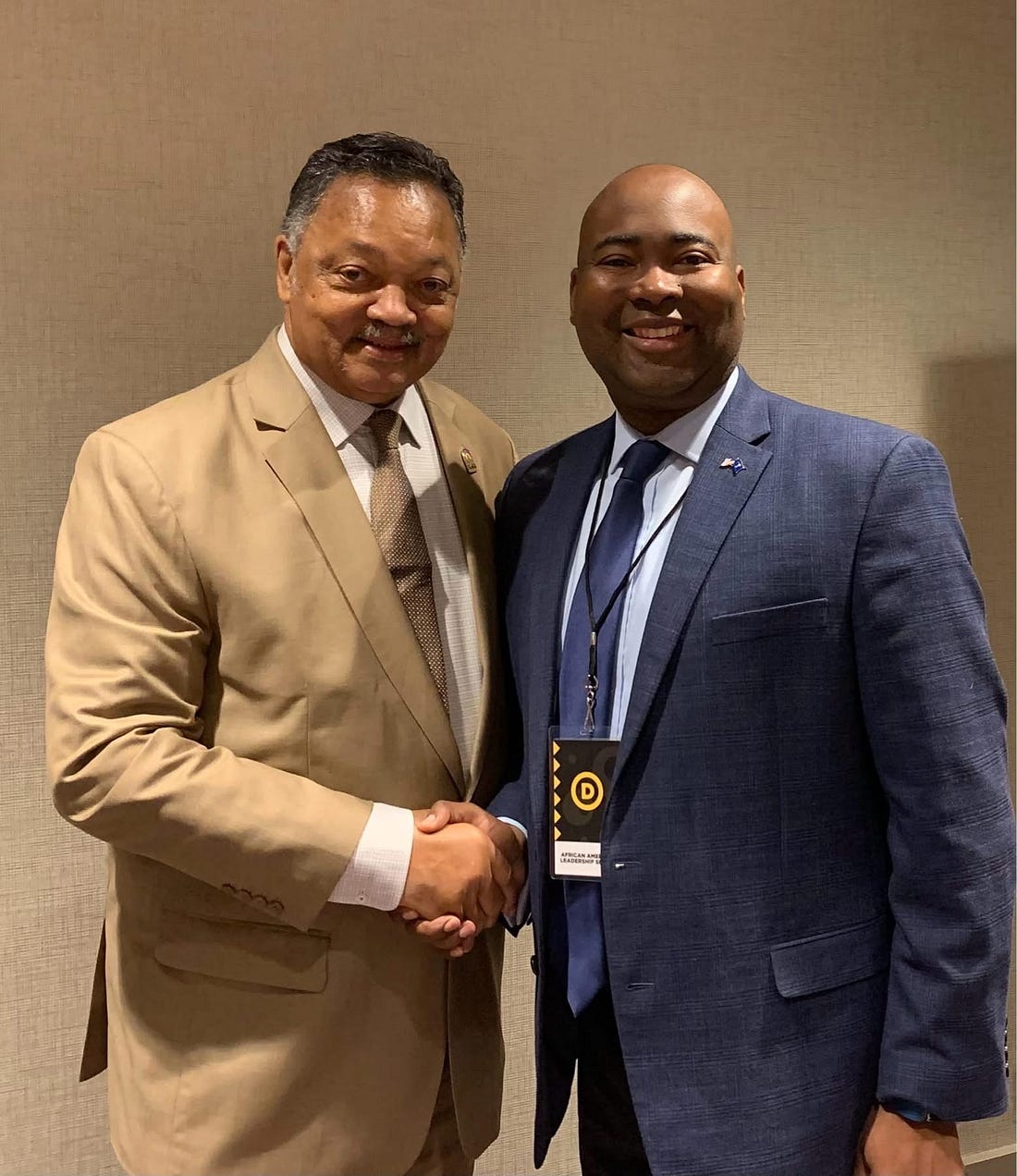
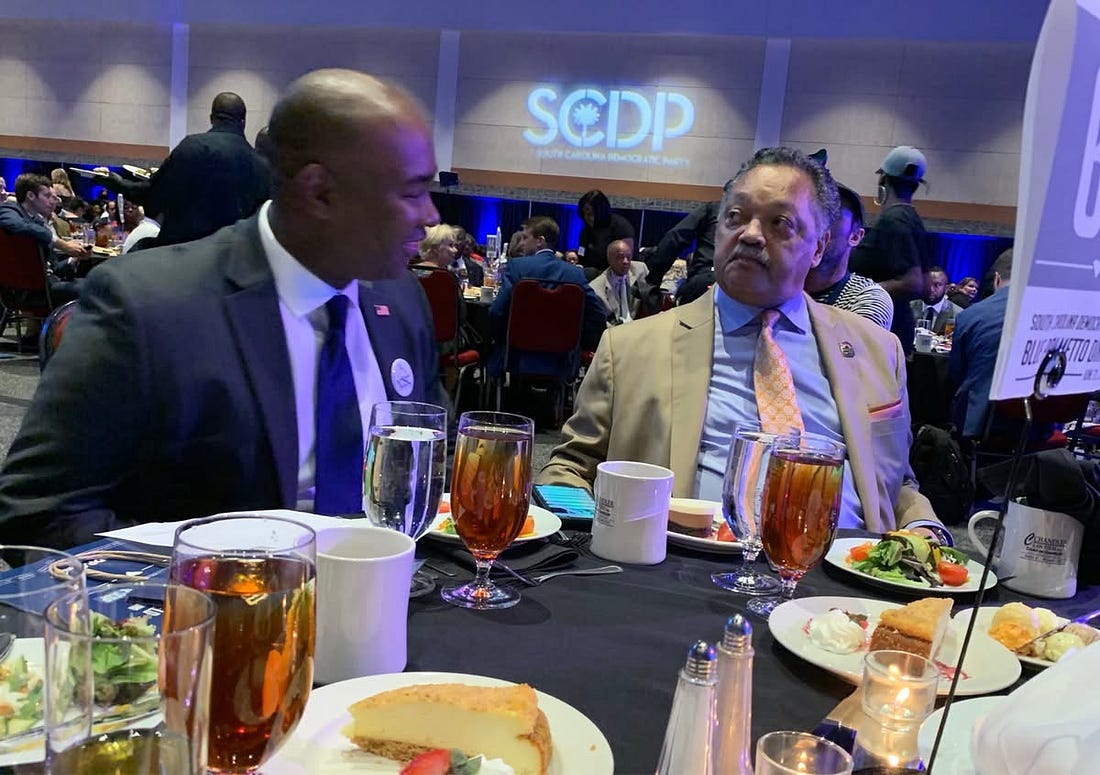
His presence was enormous. Not loud for the sake of being loud, but expansive. He changed rooms when he entered them. He changed institutions when he challenged them. And in 1984 and 1988, he changed the imagination of American politics. My first real political memory was watching the 1988 Democratic National Convention with my grandfather in Orangeburg, South Carolina. I was just a boy, sitting up far past my bedtime, when Reverend Jackson took the stage just before 11 PM. He had not won the nomination. Governor Michael Dukakis would carry the banner that year. But I do not remember Dukakis’ speech. I remember Jesse Jackson. He said: “America is not a blanket woven from one thread, one color, one cloth.” To a poor Black kid from South Carolina, that was not simply a metaphor. It was permission. Until that moment, I had never seen someone who looked like me command a convention hall with more than a thousand delegates behind him. I had never seen a Black candidate compete nationally, win primaries, accumulate delegates, and stand at the center of the Democratic Party conversation. He did not win the nomination. But he won our imagination. And that is no small thing. Movements are not sustained only by victories. They are sustained by expansions of belief. Reverend Jackson expanded what felt possible — inside the Democratic Party and across the country. He built the Rainbow Coalition not as a slogan, but as a governing philosophy. He insisted that poor and working class people, Black and white, Latino and Asian, urban and rural, all belonged inside the same political tent. He pushed the Democratic Party to be more inclusive, more representative, more courageous. He helped institutionalize proportional representation and expanded participation in the delegate process. He elevated grassroots organizing in communities that had long been overlooked. He transformed protest energy into electoral power. There would be no Ron Brown leading the Democratic National Committee in a new era. There would be no Donna Brazile managing a presidential campaign and later chairing the party. There would be no Barack Obama ascending to the presidency. And there would be no Jaime Harrison serving as Chair of the DNC — not in the way America came to know us — without Jesse Jackson first widening the path. That is not exaggeration. It is lineage. He normalized the idea of a Black candidate for President decades before that breakthrough came. He proved that such a candidacy could be serious, disciplined, delegate winning, coalition building. He did not simply challenge the system. He entered it. And he reshaped it from within. Four years after watching him speak, I volunteered at my county fair for the Clinton Gore campaign. Years later I would serve as Chair of the Democratic National Committee. The climb began with belief. And belief began with seeing. I am somebody because he was somebody. And today, as we reflect on his life, we must also reflect on the responsibility his legacy places on us. He taught us that inclusion is strength. That coalition is power. That hope is not naïve — it is necessary. The work did not end with his campaigns. It did not end with Barack Obama’s election. It does not end now. If America is not one thread, then it requires all of us to keep weaving. Reverend Jesse Jackson did not win the nomination. He changed the future. May he rest in power. You’re currently a free subscriber to Jaime’s Table. For the full experience, upgrade your subscription.
|
Tuesday, February 17, 2026
I Am Somebody Because He Was Somebody




Subscribe to:
Post Comments (Atom)
No comments:
Post a Comment